The City of Karratha is supporting the Department of Primary Industries and Regional Development by encouraging community members to keep an eye out for Calotrope (*Calotropis procera*), an invasive weed that can impact native vegetation, pastoral land and the local environment.
Early identification and reporting can help prevent its spread.
What is Calotrope?
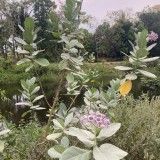
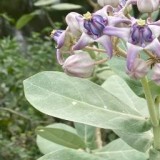
Calotrope, also commonly known as Rubber Bush, is an upright, branched shrub or small tree that typically grows between one and four metres tall.
It contains milky sap and can form dense thickets, particularly on floodplains and over-grazed pastures in the drier regions of northern Australia.
Calotrope is known by several other names, including Rubber Plant, Giant Milkweed, Indian Milkweed and Kapok Tree.
Why is Calotrope a concern?
- Calotrope is an invasive weed that can have significant environmental and agricultural impacts.
It can: - Compete with native grasses and vegetation.
- Form dense thickets that change natural landscapes.
- Reduce the productivity of pastoral land.
- Make livestock mustering and land management more difficult.
Once established, Calotrope can be difficult to eradicate, making early detection and reporting important.
What should I do if I see Calotrope?
If you suspect you've found Calotrope:
- Record the location – Note where you found the plant.
- Take a photo – Take a clear image to help with identification.
- Leave it undisturbed – Do not move the plant or its seed pods.
- Report your sighting to either:
- The Department of Primary Industries and Regional Development through MyPestGuide Reporter
- The City of Karratha’s Report It portal

Frequently asked questions
What does Calotrope look like?
Calotrope is an upright shrub or small tree, generally growing between one and four metres tall. It has branched growth and contains milky sap.
Is Calotrope known by any other names?
Yes. Calotrope is also known as Rubber Bush, Rubber Plant, Cabbage Tree, Kapok Tree, Giant Milkweed, Indian Milkweed, King Edward's Crown and Small Crown Flower.
Why is Calotrope considered a problem?
Calotrope can compete with native vegetation, form dense thickets and reduce the productivity of pastoral land. It can also make livestock mustering and land management more difficult.
Where does Calotrope grow?
Calotrope commonly grows on floodplains and over-grazed pastures in the drier regions of northern Australia.
Can I remove Calotrope myself?
If you suspect you have found Calotrope, do not disturb, cut, move or attempt to remove the plant or its seed pods. Report the sighting so the plant can be correctly identified and appropriate management advice provided.
Control is recommended to be undertaken by trained and appropriately equipped personnel to minimise risks and ensure effective treatment. If control is required, the following methods may be considered by trained personnel, depending on the size and location of the plant and site conditions.
Recommended control methods:
- Mechanical control: Hand-pulling may be suitable for seedlings, while machinery may be required for larger shrubs. Root removal should be undertaken where appropriate to minimise regrowth.
- Chemical control: Herbicide treatments should be carried out by trained personnel in accordance with registered product labels and applicable requirements.
- Foliar spraying: Registered foliar herbicides, such as imazapyr or metsulfuron-methyl, may be suitable for seedlings and young plants under 2 metres tall. Use a suitable wetting agent where specified on the product label, and take care to avoid damage to desirable vegetation.
- Basal bark treatment: For stems up to 10 cm in diameter, suitable registered herbicides, such as products containing triclopyr or fluroxypyr, may be applied to the lower 30 cm of bark around the full circumference of the stem, in accordance with label directions.
- Cut-stump treatment: Where appropriate, woody stems may be cut close to ground level and the cut surface promptly treated with a suitable registered herbicide, in accordance with label directions.
- Follow-up and prevention: Regular monitoring and prompt treatment of regrowth and new seedlings are recommended to minimise the risk of re-establishment.
How is Calotrope controlled?
Calotrope can be difficult to eradicate once established. Management options depend on the location and extent of the infestation. Seek advice from the relevant biosecurity authority before undertaking control measures.
How do I report Calotrope?
You can report suspected sightings directly to the City of Karratha or through the MyPestGuide Reporter platform.
Include a clear photo and the location of the plant to assist with identification.
- The Department of Primary Industries and Regional Development through MyPestGuide Reporter
- The City of Karratha’s Report It portal